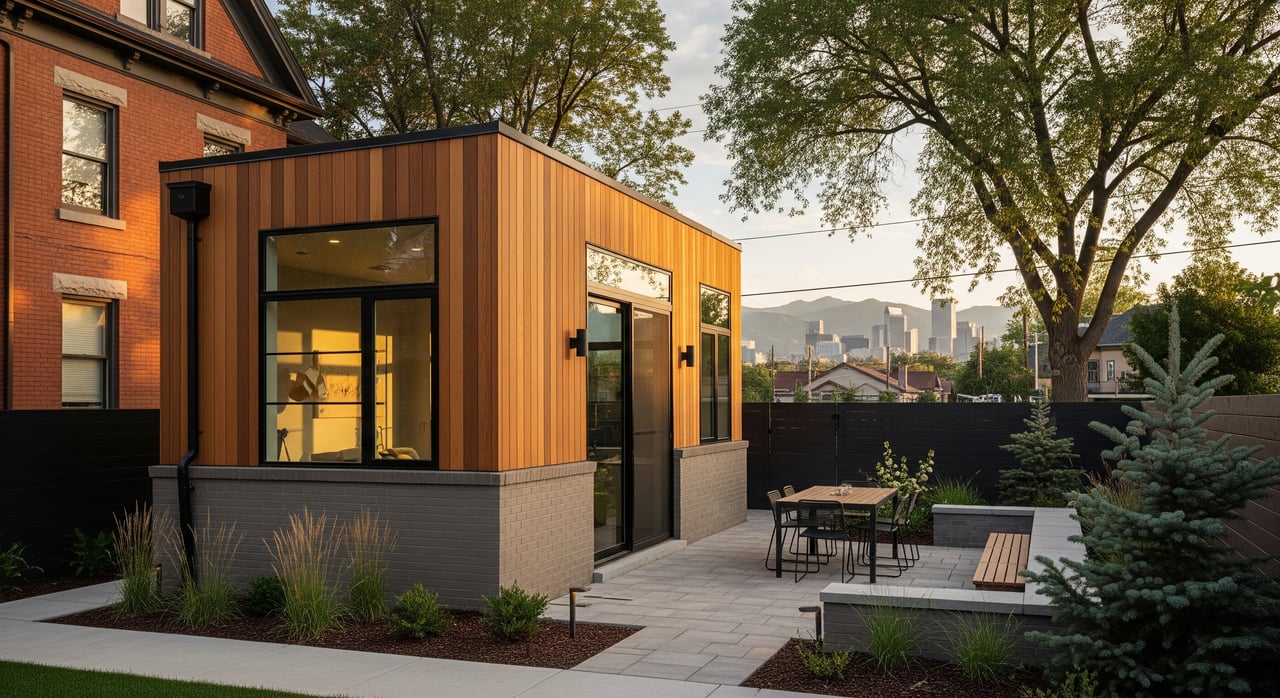
Thinking about adding an ADU to your Congress Park home, but not sure where to start? You are not alone. Many Denver homeowners love the idea of a flexible rental or guest space, yet the rules, costs and timelines can feel overwhelming. In this guide, you will learn how ADUs work in Denver, what to expect in Congress Park, how to budget, and how to think about ROI before you build. Let’s dive in.
What is an ADU in Denver?
An accessory dwelling unit is a smaller, independent residence on the same lot as your main home. In Denver, typical ADU formats include:
- Detached backyard cottage
- Attached addition that functions as a separate unit
- Garage conversion
- Basement apartment or finished basement
These choices offer different price points, timelines and rental potential. Your lot, utilities and zoning will guide which path makes sense.
Can you build an ADU in Congress Park?
Congress Park is an established neighborhood with pre-war homes, alley access on many blocks and mature landscaping. That mix makes ADUs possible on many properties, but feasibility is always parcel-specific.
Zoning and overlays
ADU eligibility depends on your property’s zoning designation. ADUs are generally permitted in many residential zone districts, but the exact rules vary by parcel. If your property is within a historic district or conservation overlay, additional design review or limits may apply. Always verify your lot’s zoning and any overlay status before investing in design work.
Lot features and access
Alley access can make detached ADUs and garage conversions easier to design and service. Lot size, shape, setbacks and lot coverage limits will influence where a unit can go. Trees and established landscaping can also affect placement and costs.
Utilities, parking and addresses
Utility capacity and meter locations matter. You may need upgrades or new connections for water, sewer, electrical or gas. The city will require addressing for a separate unit. Parking requirements can vary by location and proximity to transit, and some cities relax parking rules for ADUs. Confirm current standards as you plan.
Historic and HOA considerations
If your home is landmarked or in a designated district, expect additional design and review steps. Private covenants or HOAs can restrict ADUs even when the city allows them. Review your title documents and any HOA rules early.
Key Denver rules to confirm
Denver regulates siting, size, height, setbacks, lot coverage and design. Before you begin, confirm these topics for your specific parcel:
- Allowed ADU types for your zoning
- Maximum square footage and height limits
- Rear and side setbacks, and any alley-facing rules for detached units
- Lot coverage and permeability requirements
- Parking requirements or exemptions
- Utility connection and metering standards
- Permit types, inspections and fee schedules
Some jurisdictions require owner-occupancy for properties with ADUs, while others do not. Confirm Denver’s current policy. If you plan short-term rentals, Denver requires registration and has specific rules. Make sure your plan aligns with current regulations.
What will it cost in Congress Park?
Your budget will include soft costs, hard construction, utilities and a contingency for surprises. Older homes and tight urban lots can add complexity, so plan carefully.
Soft costs
- Architectural and engineering plans
- Site surveys and soils reports if needed
- Permitting and plan review fees
- Impact or connection fees for utilities
- Financing and closing costs if you use a loan
- Possible legal or HOA review fees
Hard costs and utilities
- Site prep and demolition
- Foundation, framing, roofing and exterior finishes
- Windows and doors, insulation and weatherproofing
- Mechanical, plumbing and electrical systems
- Kitchen, bath, flooring, fixtures and appliances
- Landscaping, fencing and final grading
- Utility upgrades or new service connections
Typical cost ranges
- Garage conversion: roughly $30,000 to $100,000+ depending on structure and systems
- Basement or attic conversion: often $50,000 to $150,000+ based on egress, waterproofing and structural needs
- Attached addition: commonly $150,000 to $300,000+
- Detached new-build ADU: often $150,000 to $400,000+
Local labor and materials have run higher in recent years, so get multiple Denver-area bids. Include a 10 to 20 percent contingency for surprises.
Permits and timelines
Design and plan prep often takes 2 to 8 weeks. Plan review and permit issuance may take 4 to 12 or more weeks depending on city backlog and revisions. Construction typically takes 3 to 9 months, for a total project timeline of about 3 to 12 months from initial planning to final inspection.
Financing options to consider
Homeowners in Denver commonly use:
- Cash
- Home equity line of credit or home equity loan
- Renovation mortgages such as FHA 203(k) or Fannie Mae HomeStyle Renovation
- Construction or construction-to-permanent loans for larger builds
- Personal loans or contractor-arranged financing
- Periodic grants or pilot programs that may appear at the city or state level
Check current program eligibility and terms, and confirm whether ADU work qualifies.
How to think about ROI
ADUs can deliver flexibility and potential income, but returns vary based on design decisions, costs and market rents.
Income and use
- Long-term rental: The most common approach. Rents for studio and 1-bedroom units in central Denver markets depend on size, finish and location.
- Short-term rental: Can be profitable but requires compliance with Denver’s registration and rules.
- Non-financial value: Many owners use ADUs for multigenerational living, guest space or home office flexibility, which can support resale appeal even if pure cash flow is modest.
Valuation and taxes
An ADU can increase market value, but not always by the full cost of construction. Appraisers consider income potential and buyer demand for properties with an additional unit. Expect assessed value to rise with additions, which can increase property taxes.
Example ROI framework
Use these steps to evaluate potential returns:
- Gross annual rent = monthly rent × 12
- Vacancy allowance = gross income × vacancy rate
- Operating expenses = utilities you cover, maintenance, insurance, property taxes and management
- Net operating income (NOI) = gross income − vacancy − operating expenses
- Cap rate = NOI ÷ total project cost
- Cash-on-cash return = (NOI − debt service) ÷ cash invested
- Payback period = project cost ÷ annual net cash flow
Illustrative example:
- Scenario: build a detached ADU for $250,000, expected rent $2,000 per month
- Gross annual income: $24,000
- Vacancy at 5 percent: $1,200, effective gross $22,800
- Operating expenses at 30 percent of gross: $6,840
- NOI: $15,960
- If financed with 20 percent down and annual debt service of $12,000, annual cash flow is $3,960
- Cash-on-cash return: 7.9 percent
- Simple payback: about 63 years, not including appreciation or tax benefits
This shows why project cost, achievable rent and financing terms matter. Many owners prioritize flexibility and long-term value, not just near-term cash flow.
Congress Park market factors to watch
- Demand for small units near central Denver amenities
- The number of comparable rentals and existing ADUs nearby
- Interest rates and financing costs affecting cash flow
- Regulatory changes affecting short-term rentals, parking or tenant rules
- Resale buyer appetite for a home with an ADU
Conversion or new build: Which fits your lot?
A quick way to narrow your path is to align design with budget and site:
- Garage conversion: Lower cost and faster, but may have structural upgrades, insulation and utility routing to solve.
- Basement conversion: Moderate cost and often efficient, but you must meet egress and waterproofing standards, and ceiling height can be limiting.
- Attached addition: Great privacy with solid rental features, but higher cost and longer timeline.
- Detached new-build: Highest rent potential and flexibility, but also the highest cost and complexity.
Step-by-step checklist
- Verify zoning, overlays and any HOA or deed restrictions for ADU eligibility.
- Measure your lot and sketch potential locations for a conversion or new unit.
- Consult an architect or ADU designer for preliminary plans and cost ranges.
- Confirm utility requirements with water, sewer, electrical and gas providers.
- Submit plans to the City and County of Denver for review and permits, and pay fees.
- Arrange financing if needed, such as a HELOC, renovation mortgage or construction loan.
- Hire a licensed contractor and schedule inspections as required.
- Complete construction and final inspections, and obtain any required certificate of occupancy.
- If renting, comply with Denver landlord-tenant rules and short-term rental registration if applicable.
- Update insurance and notify your lender and the assessor as required.
Neighbor and design considerations
ADUs in Congress Park benefit from design that respects the neighborhood’s established character. Thoughtful massing, materials and setback awareness can smooth the review process and neighbor conversations. Simple steps like sharing plans with adjacent owners and planning construction logistics can reduce friction during the build.
Ready to explore your ADU options?
If you want a clear, property-specific plan for an ADU in Congress Park, we are here to help. We combine construction-informed guidance with neighborhood expertise to help you weigh conversion vs new build, estimate rents, and understand likely resale impact. Start a conversation with the Linkow Baltimore Team to move forward with confidence.
FAQs
What ADU types are allowed in Denver?
- Denver commonly allows detached backyard cottages, attached units, garage conversions and basement apartments, subject to parcel-specific zoning and code standards.
Are ADUs permitted on my Congress Park lot?
- It depends on your property’s zoning and any overlays or covenants. Confirm your parcel’s designation and standards before investing in plans.
How much does an ADU cost in Congress Park?
- Typical ranges: garage conversion $30,000 to $100,000+, basement or attic conversion $50,000 to $150,000+, attached addition $150,000 to $300,000+, detached new-build $150,000 to $400,000+.
How long does permitting take in Denver?
- Plan review can take 4 to 12 or more weeks depending on backlog and revisions. From design through construction, many projects take 3 to 12 months total.
Can I use my ADU for short-term rentals?
- Denver requires short-term rental registration and has specific rules. Confirm current regulations and neighborhood limits before listing.
Will my property taxes increase after adding an ADU?
- Additions typically increase assessed value, which can raise taxes. Check guidance from the assessor on how ADUs are valued.
Do I need separate utility meters for an ADU?
- Requirements vary. The city will address separate dwelling units, and utilities may or may not require separate meters. Confirm with the water, sewer and energy providers early.